

Solid Wood vs. Engineered Wood Flooring: Key Differences, Applications and Selection Guide
Nov 24, 2026
Leave a message
Wood flooring remains a popular choice for residential interiors, commercial buildings, hospitality spaces and property development projects. Its natural grain patterns, warm appearance and compatibility with different interior styles make it a long-term flooring option for architects, designers, contractors and flooring distributors.
However, selecting the right wood flooring involves more than choosing a wood species or surface finish. One of the most important decisions is whether to use solid wood flooring or engineered wood flooring.
Although both products feature real natural wood surfaces, their internal structures, dimensional stability, installation requirements and maintenance considerations are different. Understanding these differences helps buyers select flooring materials according to project conditions rather than appearance alone.
As a wood flooring manufacturer, Awood provides both solid wood flooring and engineered wood flooring, supporting different material specifications and application requirements.
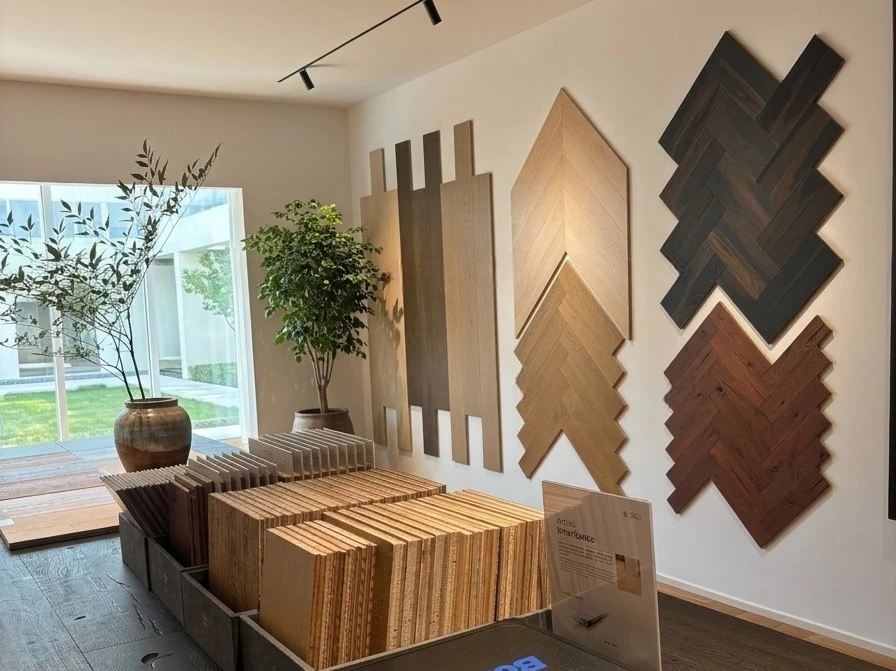
What Is the Difference Between Solid and Engineered Wood Flooring?
The main difference between solid wood flooring and engineered wood flooring is their internal construction.
Solid wood flooring is manufactured from a single piece of natural timber. Each plank consists of solid wood throughout its thickness, allowing the natural grain, color variations and characteristics of the selected species to remain visible across the entire board.
Engineered wood flooring uses a layered construction. Its top surface consists of a genuine hardwood veneer, while the underlying structure is made from multiple layers of wood-based materials bonded together.
Both products provide the appearance and natural texture of real wood. However, their different constructions affect how they respond to environmental changes, how they are installed and how they can be maintained over time.
For flooring distributors and project contractors, understanding this structural difference is essential when specifying materials for different building environments.
Material Structure and Manufacturing Differences
Solid Wood Flooring: Single-Piece Natural Timber
Solid wood flooring is produced by processing natural timber into individual flooring boards. The wood is cut, dried, milled and finished according to the required dimensions and surface specifications.
A typical solid hardwood plank is approximately 3/4 inch thick, although actual dimensions vary depending on the product specification.
Because the entire plank consists of the same wood material, its surface can generally be sanded and refinished multiple times during its service life, provided sufficient material thickness remains.
The manufacturing process involves several important stages:
Timber selection according to species, grade and appearance.
Kiln drying to control moisture content.
Precision milling to achieve the required dimensions and profile.
Surface sanding and finishing.
Inspection of dimensions, appearance and moisture conditions.
Oak, walnut, maple and other hardwood species are commonly selected for solid wood flooring because of their grain characteristics, appearance and physical properties.
Engineered Wood Flooring: Multi-Layer Construction
Engineered wood flooring combines a natural hardwood wear layer with a structurally designed core.
The top layer provides the visible wood grain and surface finish. Beneath it, multiple wood layers are bonded together, generally with their grain directions arranged perpendicular to one another.
This cross-layer construction helps distribute internal stresses and reduces the dimensional changes associated with temperature and humidity fluctuations.
Depending on the product design, the core may use plywood or other engineered wood-based materials.
Important manufacturing considerations include:
Natural wood veneer selection and thickness control.
Core material selection and layer arrangement.
Adhesive application and bonding conditions.
Pressing and dimensional control.
Surface sanding, coating and finishing.
Inspection of bonding quality, flatness and product dimensions.
The thickness of the natural wood wear layer is particularly important because it determines the potential for future sanding and refinishing.
Dimensional Stability and Moisture Performance
Environmental conditions are among the most important factors when choosing wood flooring.
Natural wood absorbs and releases moisture according to surrounding humidity conditions. When moisture content increases, wood can expand. When it decreases, the material can shrink.
For solid wood flooring, these changes may lead to gaps between boards, cupping, warping or other dimensional variations if installation and environmental conditions are not properly controlled.
Engineered wood flooring is designed to reduce these movements through its cross-layer construction.
The perpendicular arrangement of the core layers helps balance expansion and contraction forces, providing better dimensional stability than conventional solid wood construction.
This makes engineered wood flooring particularly suitable for projects where temperature and humidity conditions fluctuate.
However, dimensional stability should not be confused with waterproof performance. Neither product should be exposed to uncontrolled water infiltration or prolonged moisture accumulation.
Before installation, contractors should check:
Subfloor moisture content.
Indoor temperature and relative humidity.
Concrete slab moisture conditions.
Product moisture content and acclimation requirements.
Manufacturer-recommended expansion gaps.
These checks help reduce installation problems and improve long-term flooring performance.
Installation Requirements and Suitable Applications
Solid and engineered wood flooring have different installation requirements because of their structural characteristics.
Solid wood flooring is commonly installed using nail-down methods over suitable wood subfloors. It is generally recommended for above-grade or appropriate on-grade installations.
Its sensitivity to moisture makes it less suitable for below-grade spaces, where moisture can migrate through concrete slabs or surrounding building structures.
Engineered wood flooring offers more installation flexibility. Depending on the product profile and installation system, it can be installed using:
Nail-down installation.
Staple-down installation.
Glue-down installation.
Floating floor installation with compatible locking or joining systems.
These methods allow engineered flooring to be considered for a wider range of subfloor conditions, including suitable concrete substrates and certain below-grade applications.
For projects involving underfloor heating, engineered wood flooring is frequently considered because its layered structure offers better dimensional stability under controlled temperature changes.
Nevertheless, installation compatibility depends on the flooring construction, adhesive specifications, heating system temperature and manufacturer's technical instructions.
Choosing the installation method before finalizing the product specification helps prevent unnecessary material adjustments and installation costs.
Durability, Refinishing and Maintenance
Both solid and engineered wood flooring can provide long-term service when correctly manufactured, installed and maintained.
Solid wood flooring has an important advantage in its refinishing potential. Since the plank consists of natural wood throughout its thickness, the surface can generally be sanded and refinished several times.
This makes it suitable for projects where long-term surface restoration is an important consideration.
Engineered wood flooring also offers durability, but its refinishing potential depends on the thickness of the natural wood wear layer.
Products with thicker hardwood veneers may allow professional sanding and refinishing, while thinner wear layers provide less material for future restoration.
For both flooring types, regular maintenance should include:
Sweeping or vacuuming to remove abrasive dust and particles.
Using cleaning products specifically designed for wood flooring.
Avoiding excessive water during cleaning.
Maintaining stable indoor humidity conditions.
Repairing surface damage before it develops into more extensive problems.
For commercial applications, buyers should also consider expected foot traffic, surface coating specifications and the availability of replacement materials.
Environmental Considerations of Wood Flooring
Material utilization is another factor in the comparison between solid and engineered wood flooring.
Solid wood flooring uses natural timber throughout the plank. Its environmental impact depends on the wood species, forest management practices, timber sourcing and manufacturing efficiency.
Engineered wood flooring can make more efficient use of selected hardwood species because the visible natural wood layer is thinner than a solid plank.
The underlying core can be manufactured from other suitable wood materials, reducing the amount of premium hardwood required for each flooring board.
However, environmental performance should not be judged by construction alone.
Buyers should also examine timber sourcing documentation, responsible forestry certifications where applicable, adhesive formulations, formaldehyde emissions and surface coating specifications.
For international projects, relevant environmental documentation and product compliance requirements should be confirmed according to the destination market.
How to Choose the Right Wood Flooring for Your Project
There is no universal answer when choosing between solid and engineered wood flooring. The correct option depends on the installation environment, project budget, maintenance expectations and design requirements.
Consider the following factors before placing a bulk order:
Installation Location
For suitable above-grade residential spaces, solid wood flooring can provide a traditional natural timber solution. Engineered wood flooring is often more suitable for projects requiring installation flexibility across different floor levels.
Subfloor Conditions
Check whether the project uses a wooden subfloor or concrete slab. Engineered wood flooring offers more installation options, but the selected product must still meet the substrate and moisture requirements.
Long-Term Maintenance
If repeated sanding and refinishing are important, consider solid wood flooring or engineered flooring with a sufficiently thick natural wood wear layer.
Environmental Conditions
Projects with fluctuating humidity or temperature may benefit from the dimensional stability of engineered wood flooring.
Design and Product Specifications
Wood species, grain selection, plank dimensions, surface texture, coating, color and finish all influence the final appearance.
For commercial flooring orders, buyers should confirm that the approved sample, production specifications and delivered batch maintain consistent requirements.
Awood: Manufacturing Solid and Engineered Wood Flooring
As a wood flooring manufacturer, Awood supplies both solid wood flooring and engineered wood flooring for different residential and commercial applications.
Rather than limiting customers to a single flooring construction, Awood provides two product options to accommodate different project conditions, installation methods and purchasing requirements.
For solid wood flooring, buyers can evaluate natural timber characteristics, plank dimensions, wood grades, surface treatments and finishing requirements according to their project specifications.
For engineered wood flooring, product selection can focus on the natural wood veneer, core construction, overall thickness, surface finish and installation profile.
Awood's product offering also supports different flooring design requirements, including parquetry flooring and other wood flooring configurations.
When developing a flooring specification, customers can discuss the following requirements with the Awood team:
Wood species and natural grain appearance.
Solid or engineered construction.
Plank width, length and thickness.
Natural wood wear-layer specifications.
Surface brushing, sanding and finishing.
Color matching and coating requirements.
Installation profile and connection system.
Packaging and order specifications.
For distributors, wholesalers, contractors and flooring brands, having access to both solid and engineered wood flooring from one manufacturer makes it easier to compare material structures and coordinate product sourcing.
The selection process should begin with the actual installation environment and performance requirements. Once these conditions are confirmed, Awood can help evaluate the appropriate flooring construction and product specifications.