

Waterproof Wood Flooring: Improving Moisture Resistance And Durability
Nov 24, 2026
Leave a message
Moisture is one of the most important factors affecting wood flooring performance. Exposure to water, high humidity and damp subfloors can cause wood to expand, contract, warp or develop surface damage. For residential buildings, commercial properties and renovation projects, selecting flooring with suitable moisture resistance is essential for maintaining product appearance and service life.
As demand for moisture-resistant flooring increases, manufacturers are focusing on improved core structures, protective surface treatments, edge protection and more controlled production processes.
However, not all wood flooring products are waterproof. Solid wood flooring and conventional engineered wood flooring still respond to environmental moisture, even when protective coatings are applied. Understanding the difference between waterproof and water-resistant performance helps buyers select suitable products for their intended applications.
As a wood flooring manufacturer, Awood offers both solid wood flooring and engineered wood flooring, supporting different product structures, dimensions and finishing requirements for residential and commercial projects.
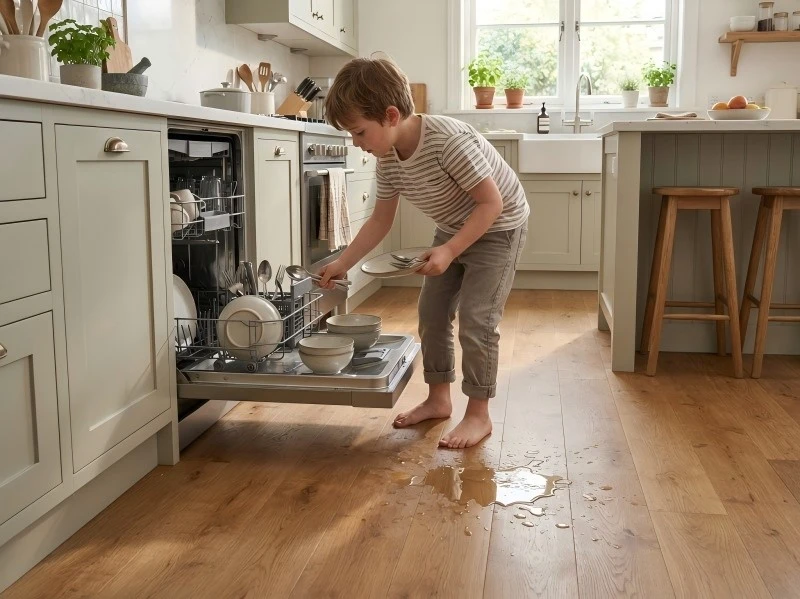
Waterproof vs. Water-Resistant Wood Flooring: What Is the Difference?
Before purchasing moisture-resistant flooring, buyers should understand the difference between waterproof and water-resistant products.
Waterproof flooring is designed to prevent water from penetrating the flooring material under specified test conditions. Its performance depends on the complete product construction, including the surface, core, edges and connection system.
Water-resistant wood flooring, on the other hand, is designed to tolerate limited moisture exposure, such as occasional spills, splashes or short-term contact with water.
These terms should not be used interchangeably.
For example, a hardwood floor with a protective surface coating may resist minor spills, but moisture can still enter through unfinished edges, joints or damaged areas.
Some engineered hardwood products use specially treated cores or protective surface systems to improve moisture resistance. However, these features are product-specific and should be verified through technical specifications and test reports.
Buyers should therefore ask suppliers whether the product is suitable for temporary spills, prolonged humidity exposure or direct water contact rather than relying on a general waterproof label.
How Moisture Affects Wood Flooring Performance
Wood is a hygroscopic material, meaning it naturally absorbs and releases moisture according to surrounding environmental conditions.
When wood absorbs moisture, its cellular structure expands. When it loses moisture, it contracts.
These changes can affect flooring performance in several ways.
Board Expansion and Contraction
Changes in moisture content can cause individual boards to expand or shrink. When sufficient expansion space is not provided, flooring may develop compression-related problems or edge lifting.
Cupping and Warping
Uneven moisture distribution between the upper and lower surfaces of a plank can cause cupping or warping. These problems are particularly associated with moisture imbalances between the flooring and subfloor.
Joint and Gap Changes
As boards change dimensions, gaps may appear between individual planks. Excessive moisture can also affect joint stability and adhesive performance.
Surface and Finish Damage
Prolonged moisture exposure may cause coating deterioration, discoloration or surface separation, depending on the finishing system and wood construction.
These problems demonstrate why moisture resistance should be evaluated as a combination of material properties, manufacturing quality and installation conditions.
Engineered Wood Construction and Moisture Resistance
Engineered wood flooring is frequently considered for projects requiring better dimensional stability than conventional solid wood flooring.
Its structure generally consists of a natural hardwood wear layer bonded to multiple underlying wood layers.
The core layers are commonly arranged with their grain directions perpendicular to one another. This cross-layer construction helps distribute internal stresses and reduces dimensional movement caused by environmental humidity changes.
Several structural factors influence the performance of engineered wood flooring.
Core Material
The core may use plywood or other suitable wood-based materials. Its density, moisture condition and structural consistency influence the overall stability of the finished plank.
Layer Arrangement
The number, thickness and orientation of the core layers affect how internal stresses are distributed throughout the board.
Bonding Quality
Adhesive selection, application consistency and pressing conditions are important for maintaining bonding strength between the hardwood surface and core layers.
Overall Thickness
The total thickness of the flooring influences its structural characteristics and must be matched to the intended installation system.
Although engineered construction improves dimensional stability, it does not automatically make a product waterproof. Conventional engineered wood flooring can still experience swelling, delamination or surface damage under excessive moisture exposure.
For buyers requiring enhanced moisture resistance, the exact core composition, bonding system and product test results should be reviewed before ordering.
Surface Coatings and Protective Finishing Technologies
Surface finishing is another important factor in improving wood flooring resistance to everyday moisture exposure.
The coating acts as a protective layer between the wood surface and the surrounding environment. Its effectiveness depends on coating formulation, application thickness, curing conditions and surface coverage.
Common finishing considerations include:
UV-Cured Coatings
UV-cured coatings are used in factory finishing processes. Controlled ultraviolet exposure cures the coating, forming a surface layer with specified resistance to abrasion, scratches and everyday use.
Water-Based Coatings
Water-based finishing systems are used for different wood flooring applications. Depending on their formulation, they can provide protective surface properties while offering lower-solvent alternatives to certain conventional coatings.
Protective Surface Layers
The number of coating layers and their application quality influence the finished surface's resistance to daily wear, cleaning and minor liquid exposure.
For bulk flooring orders, buyers should request information about coating types, gloss levels, application procedures and relevant performance test results.
It is also important to understand that surface coatings mainly protect the exposed surface. They cannot completely prevent moisture from entering through untreated edges, joints or damaged sections.
Why Edge Sealing and Joint Protection Matter
Water does not always enter flooring through its main surface. Board edges, end joints and connection areas can also provide pathways for moisture penetration.
This is particularly important for engineered wood flooring, where moisture entering the core may affect the bonding between different layers.
Manufacturers can evaluate several measures to improve edge and joint protection.
Applying suitable protective treatments to exposed board edges.
Maintaining consistent milling accuracy to reduce uneven joint gaps.
Selecting adhesives compatible with the intended flooring construction.
Controlling the bonding process between the hardwood veneer and core.
Checking surface and edge quality during finished-product inspection.
For click-lock flooring systems, the connection profile and joint design should also be evaluated under the manufacturer's specified test conditions.
Buyers should confirm whether the product has been tested for surface spills, edge penetration or other specific moisture exposure conditions. A successful surface test alone does not establish full-floor waterproof performance.
Moisture Control During Manufacturing and Installation
Moisture management should begin during manufacturing and continue throughout installation.
At the factory, timber drying and moisture-content control are important for reducing dimensional variations after production.
A typical wood flooring production quality-control process may include:
Raw timber inspection and moisture-content measurement.
Kiln drying according to the selected wood species and production requirements.
Conditioning and material stabilization.
Precision milling and dimensional inspection.
Adhesive application and pressing for engineered flooring.
Surface sanding, coating and finishing.
Final inspection of moisture content, dimensions and appearance.
Installation conditions are equally important.
Before installing wood flooring, contractors should inspect the subfloor and measure its moisture content using suitable testing equipment.
Concrete substrates require appropriate moisture testing, and moisture-control systems should be installed when required by the flooring and adhesive specifications.
Indoor temperature and relative humidity should also be checked before, during and after installation.
Following the manufacturer's acclimation, installation and maintenance instructions helps reduce the risk of moisture-related flooring problems.
How to Choose Wood Flooring for Moisture-Prone Areas
Selecting the right flooring depends on the room's moisture exposure, installation conditions and expected maintenance requirements.
Kitchens
Kitchens experience frequent spills, cleaning activities and temperature changes. Buyers should consider products with suitable surface protection and clearly defined spill-resistance performance.
Bathrooms
Bathrooms experience high humidity and direct water exposure. Conventional solid wood and standard engineered wood flooring should not be assumed suitable for wet-room applications. Products specifically tested and approved for the intended conditions are necessary.
Laundry Rooms
Water leaks from washing machines and plumbing connections can affect both flooring and subfloor structures. Buyers should prioritize appropriate moisture protection and maintenance access.
Basements
Below-grade installations require particular attention to concrete moisture, vapor transmission and drainage conditions. Engineered wood flooring may offer more installation flexibility than solid wood, but only when the selected product and installation system are approved for the specific environment.
Living Rooms and Bedrooms
These areas generally have lower direct water exposure. Buyers may prioritize natural wood appearance, surface durability, comfort and long-term refinishing potential.
Before purchasing, confirm the following:
Exact flooring construction and core material.
Surface coating and protective treatment.
Edge and joint protection specifications.
Moisture-related test reports.
Approved installation locations.
Subfloor moisture requirements.
Product warranty and maintenance instructions.
A suitable flooring selection should balance moisture resistance, structural stability, design requirements and expected service life.
Awood: Manufacturing Solid and Engineered Wood Flooring
Awood manufactures both solid wood flooring and engineered wood flooring, supporting different construction requirements for residential and commercial projects.
Rather than offering only one flooring structure, Awood provides two product categories that allow customers to select materials according to installation conditions, design preferences and performance specifications.
For solid wood flooring, customers can discuss wood species, natural grain appearance, plank dimensions, surface grades and finishing options.
For engineered wood flooring, product specifications can focus on the natural hardwood wear layer, core material, layer arrangement, overall thickness and installation profile.
Awood's manufacturing customization can address several important product requirements:
Wood Material Selection
Different wood species and grain characteristics can be evaluated according to appearance, density and intended application.
Product Structure
Customers can specify solid or engineered construction depending on project requirements.
Dimensional Customization
Plank length, width and thickness can be developed according to approved product specifications.
Surface Treatment
Brushing, sanding, staining, color matching and finishing options can be discussed for different flooring collections.
Moisture-Related Specifications
For projects requiring improved moisture resistance, customers can discuss appropriate product construction, material moisture control, bonding requirements and surface protection. Any waterproof or enhanced water-resistance claim must be supported by testing of the actual finished product.
Quality Inspection
Production inspection can be organized around agreed specifications, including moisture content, dimensions, surface appearance and bonding quality where applicable.
For flooring distributors, wholesalers, contractors and private-label brands, working with a manufacturer that supplies both solid and engineered wood flooring makes it easier to compare different structures and develop suitable product collections.
Choosing the right wood flooring starts with understanding the actual moisture conditions of the installation environment. Product structure, surface protection, manufacturing controls and installation requirements must work together to achieve the expected performance.
Contact Awood to discuss your solid wood flooring and engineered wood flooring requirements, and develop customized flooring specifications for your next project.